The Dirt Inside, a blog about travels and adventures, close and far and about life, visited the Beaty Biodiversity Museum. Thinking to see the big blue whale skeleton, the blogger was pleasantly surprised by what goes on in the underground level of the museum, where the real treasures are displayed. Here is a recap of the experience:
It’s a natural history museum (you might have guessed that…) that packs a lot in a little over 1,800 square meters (20,000 square feet). When I say a lot, I mean a lot. In addition to a complete 25-meter long blue whale skeleton the collection comprises two million specimens. Two million fossils, shells, insects, fungi, mammals, birds, reptiles, amphibians and plants from around the world. It’s slightly overwhelming I have to admit.
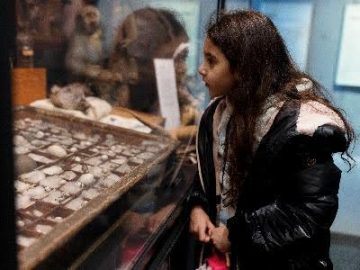
The museum is mostly filled with large shelving units. Row after row of large black floor to ceiling storage units. Some have glass panels allowing visitors to peek inside, others are locked, some are refrigerated, some have drawers hiding mysterious shells and plants and everything else you can think off in the realm of living things. If you open every drawer and look at every window you will certainly need several days to get through the collection. And that’s probably not even half of what is contained in all the locked units. It is overwhelming and mesmerizing at the same time. Rows are labelled by collection. There is the tetrapod collection with 40,000 specimens of mammals, birds, amphibians and reptiles. The herbarium with 660,000 specimens (and Canada’s largest collection of bryophytes, my bizarre obsession). 600,000 insects and their friends in the entomological collection. Some 20,000 fossils and probably close to one million fish and marine invertebrate specimens.
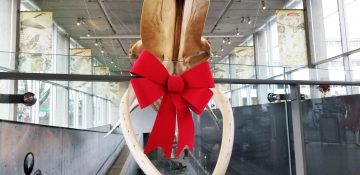
The blue whale skeleton is their masterpiece. The whale was beached on Prince Edward Island, weighting roughly 150 tons (that’s 30 t-rex, if you understand that measure better) and measuring 25 meters. They buried the whale in the sand for 20 years before digging it back out and cleaning all the disgusting half decomposed meat of it and shipping it to Vancouver. And, something I didn’t know, the whale actually has two tiny pelvic bones, remains of the rear limbs of its ancestors.

Walking through the dark rows I lost track of time discovering the hyrax (a mammal that looks like a dog with hooves and whose closest relatives are elephants and sea cows, beyond random), learning about the mitridae sea snail family and their sneaky hunting skills (harpooning preys), reading about the magical world of bryophytes and listening to a lecture on red algae (rhodophyta) that don’t actually have to be red to be part of the red family.
It’s an unusual museum with fascinating information and specimens. I thoroughly enjoyed my time and I’m going back soon for a lecture on bowhead whales. What can I say, I’m a bit of a nerd.
For the complete story, please visit The Dirt Inside.